Phulkari : A famous handicraft of Punjab

Phulkari - A famous handicraft of Punjab

In Punjab, it was popularly believed that the birth of a girl child in the family was auspicious. The mother and grandmothers would start embroidering Phulkari dupattas upon her birth because they believed that she would be the creator for future generations. Originally Phulkari was made with real flowers.

Types of Phulkari

Bagh – The Garden

Phulkari - Bagh

The phulkari that is covered all over with the embroidery is known as bagh and it came into existence in the second half of the 19th century when people became passionate about phulkari work. To make such a piece, one needs lots of patience, as it may take even a year to complete the entire task. Traditionally, the bagh was kept only for special occasions.

Vari-da-bagh

Vari-da-bagh was given as a gift to the bride by her in-laws upon entering her new home. It was always made on orange-reddish khaddar and, for embroidery, only a single golden- or orange-colored pat was used all over the khaddar except for borders.

Bawan Bagh (Bawan Phulkari)

In Punjabi, bawan means 52. This means that 52 different patterns were made to complete this phulkari. It was actually a display of samples used by professional embroiderers. So you will rarely find this phulkari.

Panchranga Bagh

Panchranga means five colors. This bagh used to be embroidered with five different colors. On the same pattern, ‘satranga bagh’ was also created that consists of seven colors.

Modern Day Phulkari

Handmade phulkari has almost disappeared in Punjab and so only industrially-made phulkaris can be seen in the market. Not only phulkari but you can now buy a phulkari suit, phulkari bedsheets, phulkari cushions and so on.

Modern Dresses made by Phulkari

Phulkari Short Jackets
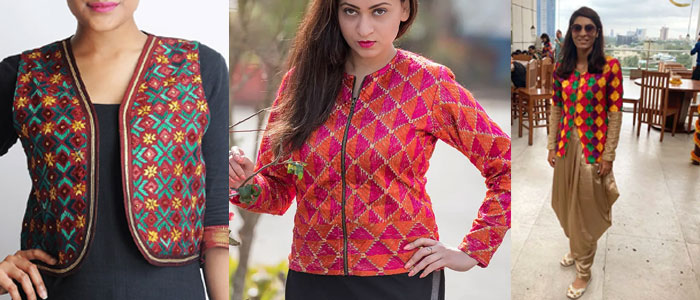
Phulkari Short Jackets Phulkari Suits
Phulkari Suits Phulkari With Jeans
Phulkari With Jeans

FAQs

1. What is Punjabi Phulkari?
Punjabi Phulkari is a traditional embroidery art from Punjab in which colorful silk threads are stitched on fabric to create beautiful floral, geometric, and cultural patterns. It is commonly used on dupattas, suits, sarees, shawls, and other ethnic wear.


2. Why is Phulkari important in Punjabi culture?
Phulkari represents Punjab's rich cultural heritage and has traditionally been associated with weddings, festivals, and family celebrations. Handmade Phulkari pieces were often gifted to brides as part of their wedding trousseau and passed down through generations.


3. What is the difference between Phulkari and Bagh embroidery?
Phulkari embroidery features decorative motifs spread across the fabric, while Bagh embroidery covers almost the entire fabric with dense stitching, leaving very little background visible. Bagh is considered a more elaborate and time-consuming form of Phulkari.


4. Which fabrics are commonly used for Punjabi Phulkari?
Traditional Phulkari was embroidered on handwoven khaddar cotton. Today, artisans also create Phulkari on georgette, chiffon, silk, cotton, velvet, organza, and linen fabrics to suit modern fashion trends.


5. Can Punjabi Phulkari be worn for weddings and festivals?
Yes. Punjabi Phulkari is one of the most popular choices for weddings, Mehndi ceremonies, Lohri, Baisakhi, Diwali, and other festive occasions. A vibrant Phulkari dupatta or suit instantly creates a traditional and elegant look.


6. How do I style a Punjabi Phulkari dupatta?
You can pair a colorful Phulkari dupatta with a plain salwar suit, kurta, palazzo set, lehenga, or even fusion outfits like jeans and a solid kurti. Keep accessories minimal so the embroidery remains the main highlight.


7. How can I identify an authentic handmade Phulkari?
Authentic handmade Phulkari usually has fine, detailed embroidery with slight variations that reflect hand craftsmanship. The stitching is neat on both sides, and the patterns look more natural than machine-made designs.


8. How should I wash and maintain a Phulkari outfit?
It is best to dry clean valuable or heavily embroidered Phulkari garments. For light embroidery, use gentle hand washing with mild detergent, avoid wringing the fabric, dry it in shade, and store it folded in a cotton cloth to protect the threads.


9. Is Punjabi Phulkari suitable for modern fashion?
Yes. Modern designers use Phulkari embroidery on jackets, sarees, crop tops, dresses, handbags, footwear, and Indo-western outfits. Its vibrant patterns blend beautifully with both traditional and contemporary styles.


10. Where can I buy authentic Punjabi Phulkari online?
Authentic Punjabi Phulkari can be purchased from trusted artisan stores, Punjabi handicraft sellers, government emporiums, and reputable online marketplaces. Before buying, check customer reviews, embroidery details, fabric quality, and return policies to ensure you receive a genuine product.


Leave a Reply

Required fields are marked as *